
Real-time quality monitoring combines heterogeneous data streams—sensors, control logs, and operator inputs—into a single, temporally aligned view. AI fuses signals to detect anomalies quickly and prioritize alerts. It transforms alerts into prescriptive actions and orchestrates data-driven responses. A continuous learning loop ingests feedback, monitors drift, and updates models to sustain transparency and auditability. The approach promises reduced defects and preemptive maintenance, inviting further exploration into how these systems evolve and scale.
What Real-Time Quality Monitoring Actually Looks Like
Real-time quality monitoring presents a continuous, data-driven view of manufacturing and service processes, capturing sensor readings, operator inputs, and environmental conditions as they occur.
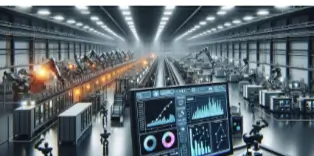
The system displays precision dashboards that juxtapose live data against specifications, enabling swift decisions.
Data calibration aligns measurements across sources, ensuring consistency.
Teams observe trends, verify alerts, and sustain proactive control without dependence on rote procedures.
Freedom rests in transparent, actionable insight.
How AI Fuses Data to Spot Anomalies Fast
AI systems integrate heterogeneous data streams from sensors, control logs, and operator inputs to construct a unified situational view. The approach emphasizes data fusion techniques that align temporal and semantic contexts, enabling rapid anomaly detection. By modeling normal behavior and cross-validating signals, the system flags deviations with minimal latency, supporting proactive intervention while preserving operational freedom and data integrity.
See also: What Is Blockchain Throughput?
From Alerts to Prescriptive Actions in Minutes
By translating alerts into concrete, time-bound actions, the system moves from notification to prescriptive guidance within minutes, ensuring operators act on validated recommendations rather than mere warnings.
AI driven dashboards orchestrate Alert prioritization, Data fusion, and Anomaly detection to enable Predictive maintenance and Continuous learning.
Real time optimization supports Quality assurance with proactive, data-driven decision pathways, empowering freedom-loving teams.
Building a Continuous Learning Loop for Quality Assurance
How can a feedback-driven loop sustain quality improvements across production cycles without interrupting throughput?
A continuous learning loop formalizes data collection, rapid experimentation, and disciplined model updates. It leverages quality automation to monitor drift, logging metrics for transparent auditing. Model feedback drives incremental refinements, reducing defect rates while preserving cadence, enabling proactive tuning and sustained reliability throughout manufacturing ecosystems.
Frequently Asked Questions
How Is Data Privacy Maintained During Real-Time Monitoring?
Data privacy is maintained through encryption, access controls, and anonymization, while real time monitoring uses secure data pipelines, audit trails, and on-device processing to minimize exposure. Proactive governance ensures continuous risk assessment and compliance with evolving privacy standards.
What Are the Common Failure Modes in Real-Time Systems?
Failure modes in real-time systems include timing jitter, clock drift, and message loss, compromising determinism. Latency guarantees rely on bounded worst-case processing times, prioritized queues, and watchdogs; proactive monitoring identifies bottlenecks and mitigates anomalies before they propagate.
Which Industries Require the Most Stringent Latency Guarantees?
Industries requiring the most stringent latency guarantees include finance, healthcare, and autonomous systems, where Industry latency targets and Real time benchmarks drive architectures; data-driven decisions emphasize proactive optimization, while freedom-seeking professionals value transparent latency budgets and predictable performance.
How Do Teams Measure ROI From Ai-Driven QA?
Teams measure ROI from AI-driven QA by tracking post-deploy defect reduction, cycle-time improvements, and accuracy gains; a 12–18% uplift in defect detection is common. ROI monetization and model calibration guide ongoing optimization and value realization.
What Certifications or Standards Apply to AI Quality Monitoring?
Certifications and standards for AI quality monitoring emphasize data governance and model validation, ensuring robust governance frameworks and rigorous model validation processes; organizations pursue ISO/IEC 27001, ISO/IEC 23960, and NIST-aligned controls, reinforcing data governance and continuous model validation.
Conclusion
Real-time quality monitoring hinges on seamless data fusion, rapid anomaly detection, and actionable guidance that minimizes defect risk. By aggregating heterogeneous streams—sensors, control logs, and operator inputs—systems render a unified, temporally aligned view that informs prescriptive actions and proactive maintenance. Continuous learning loops ingest feedback and monitor drift to sustain accuracy and transparency. Is there a more efficient path to reliability than an adaptive, auditable, end-to-end quality ecosystem that learns while it protects?
How AI Supports Real-Time Quality Monitoring
Real-time quality monitoring combines heterogeneous data streams—sensors, control logs, and operator inputs—into a single, temporally aligned view. AI fuses signals to detect anomalies quickly and prioritize alerts. It transforms alerts into prescriptive actions and orchestrates data-driven responses. A continuous learning loop ingests feedback, monitors drift, and updates models to sustain transparency and auditability. The approach promises reduced defects and preemptive maintenance, inviting further exploration into how these systems evolve and scale.
What Real-Time Quality Monitoring Actually Looks Like
Real-time quality monitoring presents a continuous, data-driven view of manufacturing and service processes, capturing sensor readings, operator inputs, and environmental conditions as they occur.
The system displays precision dashboards that juxtapose live data against specifications, enabling swift decisions.
Data calibration aligns measurements across sources, ensuring consistency.
Teams observe trends, verify alerts, and sustain proactive control without dependence on rote procedures.
Freedom rests in transparent, actionable insight.
How AI Fuses Data to Spot Anomalies Fast
AI systems integrate heterogeneous data streams from sensors, control logs, and operator inputs to construct a unified situational view. The approach emphasizes data fusion techniques that align temporal and semantic contexts, enabling rapid anomaly detection. By modeling normal behavior and cross-validating signals, the system flags deviations with minimal latency, supporting proactive intervention while preserving operational freedom and data integrity.
From Alerts to Prescriptive Actions in Minutes
By translating alerts into concrete, time-bound actions, the system moves from notification to prescriptive guidance within minutes, ensuring operators act on validated recommendations rather than mere warnings.
AI driven dashboards orchestrate Alert prioritization, Data fusion, and Anomaly detection to enable Predictive maintenance and Continuous learning.
Real time optimization supports Quality assurance with proactive, data-driven decision pathways, empowering freedom-loving teams.
Building a Continuous Learning Loop for Quality Assurance
How can a feedback-driven loop sustain quality improvements across production cycles without interrupting throughput?
A continuous learning loop formalizes data collection, rapid experimentation, and disciplined model updates. It leverages quality automation to monitor drift, logging metrics for transparent auditing. Model feedback drives incremental refinements, reducing defect rates while preserving cadence, enabling proactive tuning and sustained reliability throughout manufacturing ecosystems.
Frequently Asked Questions
How Is Data Privacy Maintained During Real-Time Monitoring?
Data privacy is maintained through encryption, access controls, and anonymization, while real time monitoring uses secure data pipelines, audit trails, and on-device processing to minimize exposure. Proactive governance ensures continuous risk assessment and compliance with evolving privacy standards.
What Are the Common Failure Modes in Real-Time Systems?
Failure modes in real-time systems include timing jitter, clock drift, and message loss, compromising determinism. Latency guarantees rely on bounded worst-case processing times, prioritized queues, and watchdogs; proactive monitoring identifies bottlenecks and mitigates anomalies before they propagate.
Which Industries Require the Most Stringent Latency Guarantees?
Industries requiring the most stringent latency guarantees include finance, healthcare, and autonomous systems, where Industry latency targets and Real time benchmarks drive architectures; data-driven decisions emphasize proactive optimization, while freedom-seeking professionals value transparent latency budgets and predictable performance.
How Do Teams Measure ROI From Ai-Driven QA?
Teams measure ROI from AI-driven QA by tracking post-deploy defect reduction, cycle-time improvements, and accuracy gains; a 12–18% uplift in defect detection is common. ROI monetization and model calibration guide ongoing optimization and value realization.
What Certifications or Standards Apply to AI Quality Monitoring?
Certifications and standards for AI quality monitoring emphasize data governance and model validation, ensuring robust governance frameworks and rigorous model validation processes; organizations pursue ISO/IEC 27001, ISO/IEC 23960, and NIST-aligned controls, reinforcing data governance and continuous model validation.
Conclusion
Real-time quality monitoring hinges on seamless data fusion, rapid anomaly detection, and actionable guidance that minimizes defect risk. By aggregating heterogeneous streams—sensors, control logs, and operator inputs—systems render a unified, temporally aligned view that informs prescriptive actions and proactive maintenance. Continuous learning loops ingest feedback and monitor drift to sustain accuracy and transparency. Is there a more efficient path to reliability than an adaptive, auditable, end-to-end quality ecosystem that learns while it protects?